
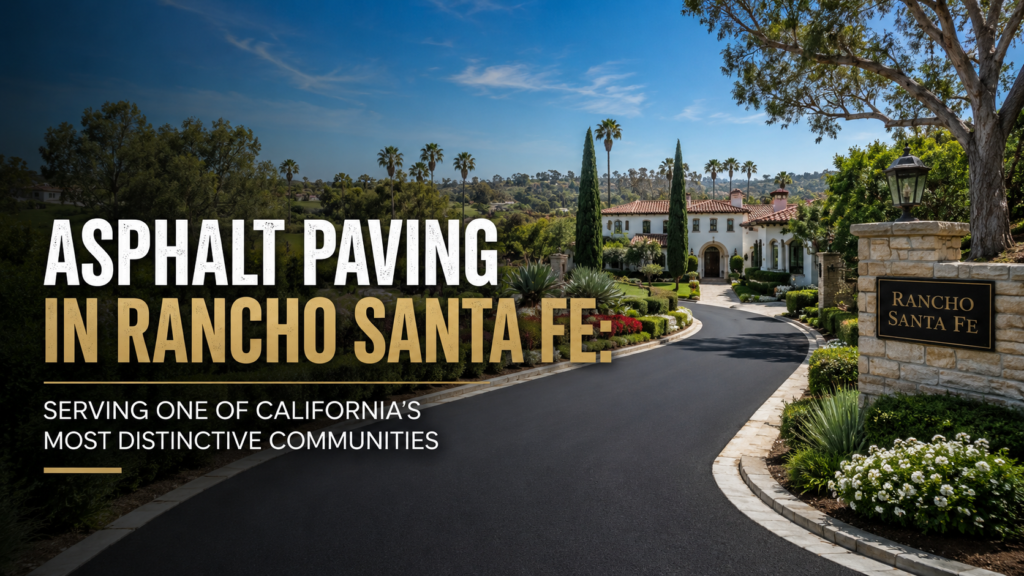
Rancho Santa Fe is one of the most exclusive residential communities in Southern California a masterplan community known for its equestrian culture, lush eucalyptus groves, estate properties, private schools, and the iconic Rancho Santa Fe Golf Club. The expectations for everything within this community, from landscaping to architecture to infrastructure, are exceptionally high. Paved surfaces are no different.
Understanding how Asphalt Contractor Rancho Santa Fe paving works in a community like Rancho Santa Fe where aesthetics and performance must align helps property owners and HOA boards make well-informed decisions about one of the most important aspects of their property infrastructure.
The Character of Rancho Santa Fe’s Built Environment
Rancho Santa Fe’s land use pattern is unlike most San Diego communities. The community is largely governed by the Rancho Santa Fe Association, which enforces architectural review standards and community guidelines. Road networks include both public streets maintained by the county and numerous private roads and driveways serving individual estates and gated communities within the broader area.
Many properties feature long, winding driveways that connect estate homes to the road network, often crossing through landscaped grounds, under tree canopies, and over varied terrain. These driveways are a visible and functional part of the property and are held to a high standard of appearance.
People Also Ask: Common Questions About Asphalt in Rancho Santa Fe
How Does Tree Canopy Affect Asphalt in Rancho Santa Fe?
One of the most distinctive features of Rancho Santa Fe is its extensive eucalyptus tree groves, along with the mature oaks and other specimen trees found on many estate properties. While these trees are a defining characteristic of the community’s beauty, they present specific challenges for asphalt paving:
- Root intrusion: Tree roots seeking moisture and nutrients can grow beneath and into asphalt surfaces, causing lifting, cracking, and heaving. This is particularly common on older driveways where trees have matured substantially
- Debris accumulation: Eucalyptus bark, leaves, and seed pods are prolific and can accumulate in drainage channels and on paved surfaces, contributing to drainage blockages and accelerated surface deterioration
- Shade effects: While shade from tree canopies reduces UV exposure to asphalt which can slow oxidation it also keeps surfaces damp for longer after rain or dew, which can accelerate deterioration in areas where water sits
Managing these tree-related challenges requires an asphalt contractor Rancho Santa Fe property owners work with to understand the relationship between mature landscaping and pavement performance and to design and install surfaces that account for these specific conditions.
What Asphalt Thickness Is Appropriate for Estate Driveways?
The appropriate thickness for an asphalt surface depends on the expected loads it will carry and the bearing capacity of the soil beneath it. For residential driveways, the typical standard involves:
- A 4-to-6-inch aggregate base course of compacted crushed rock, providing structural support and drainage
- A 2-to-3-inch compacted asphalt surface course, providing the riding surface
For estate properties in Rancho Santa Fe that occasionally receive heavy vehicles moving trucks, delivery vehicles, construction equipment additional thickness in both the base and surface layers is advisable. Heavy-duty applications might specify a 6-to-8-inch base with a 3-to-4-inch asphalt surface to accommodate the additional stress.
The quality of the sub-base preparation not just its thickness is equally important. Even a thick asphalt layer will fail prematurely if it is placed over an improperly compacted or poorly draining base.
What Are the Most Effective Asphalt Repair Methods?
Property owners in Rancho Santa Fe managing older asphalt surfaces often face decisions about repair strategies. The most common asphalt repair methods include:
- Crack sealing: Linear cracks that have not yet developed into structural failure are treated by routing (creating a clean, uniform channel) and sealing with a hot or cold applied rubberized crack sealant. This prevents water infiltration and slows crack progression
- Remove and replace (mill and fill): Deteriorated sections are cut out, the sub-base is inspected and repaired if needed, and new asphalt is installed. This is the most durable repair method for localized damage
- Infrared patching: Using infrared heating equipment to soften existing asphalt, blend it with new material, and compact it together. This creates a seamless repair that integrates with the surrounding surface
- Asphalt overlay: Applying a new surface layer over the entire existing asphalt where the underlying structure remains sound. This is effective for surfaces with widespread oxidation and minor cracking but structurally intact bases
How Does Sealcoating Affect the Appearance of Asphalt on Estate Properties?
Appearance matters significantly in Rancho Santa Fe, and sealcoating contributes meaningfully to the visual quality of asphalt surfaces. Freshly sealcoated asphalt has a deep, uniform black appearance that makes driveways and parking areas look well-maintained and cared for.
Beyond aesthetics, sealcoating provides the functional benefits of UV protection, moisture resistance, and resistance to fuel and oil spills all of which extend the service life of the pavement. In the context of high-value properties where the visual standard is paramount, regular sealcoating is both a practical maintenance measure and an aesthetic investment.
It is important to note that sealcoating should be applied only when temperatures are appropriate (generally above 50°F) and when the forecast is dry for at least 24 hours, as the sealant must cure without moisture interference. Properly applied sealcoating will dry to a uniform finish and should not leave tracking marks once fully cured.
Private Roads Within Rancho Santa Fe: Maintenance Considerations
Many gated communities and private roads within the broader Rancho Santa Fe area are maintained by HOAs or private road maintenance associations rather than by public agencies. This places the responsibility for pavement upkeep directly on the community’s governing body and its residents.
Effective private road maintenance programs in communities like Rancho Santa Fe typically include:
- Regular pavement condition assessments (often every three to five years) to establish a baseline and track deterioration
- Prioritized maintenance plans that sequence crack sealing, sealcoating, and eventual resurfacing on a planned schedule rather than reacting to failures as they occur
- Reserve fund planning that ensures capital is available for major resurfacing or reconstruction when needed
- Clear standards for drainage maintenance, including keeping catch basins and roadside swales clear of debris
Proactive management of road and driveway conditions in this community maintains both functionality and the high aesthetic standards that define Rancho Santa Fe’s character.